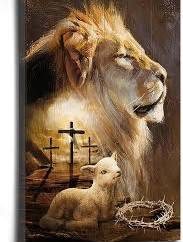
FOCUS - The King and the Impostor: A Reflection on the Loss of Christian Reverence In the dynamics of our spiritual life, we are called to walk constantly along a narrow ridge that separates true divine intimacy from the abyss of trivialization. When the message of the Gospel is stripped of its original reverence, we witness two mirror-image deviations: an excessive familiarity that reduces the Lord to our personal assistant, and a visual reduction that traps divine majesty within inadequate symbolic frameworks. 👥 1. The Danger of Familiarity: From “Lord” to Business Associate It is true that in the Gospels, Jesus addresses his disciples, saying, “I no longer call you servants, but I have called you friends” (John 15:15). However, this unprecedented gift was never an invitation to childishness or brazen familiarity. The disciples would never have dreamed of addressing Him with a casual “hey, buddy.” For them, He remained, until the very end and even beyond the Resurrection, the Lord (Kyrios) and the Savior. The apostle Paul himself, despite having received extraordinary revelations, preferred to call himself “a slave of Jesus Christ.” When we shift the focus of our relationship toward absolute familiarity, we carry out an egocentric reversal: we cease to be in the service of God and instead demand that God be at our service. We transform the Messiah into a dispenser of favors from whom we seek approval for our personal plans. Even biblical phrases such as “commit your plans to the Lord, and you will succeed” are distorted by habit: we end up handing our plans over to God while demanding that He carry them out for us. But life in the Kingdom works the other way around: it is we who must align ourselves with the Father’s one and only Plan. • For reflection: Do we approach Jesus with the awareness that He guides our steps, or do we go to Him only when we need a “favor” taken care of? 🦁 2. The Inaccuracy of Images: Reducing the King to an Animal Symbol Alongside this sentimental drift, we have inherited the habit of identifying the deity through images or symbols linked to the animal world: the lion to signify the protector, the lamb to represent the victim. The Fathers of the Eastern Church very early on recognized the subtle inaccuracy of this practice [entity-precision-recall]. In A.D. 692 (the Trullan Council), the Church formally prohibited the depiction of Jesus in the form of a lamb, mandating that He be portrayed exclusively in His human form [entity-precision-recall]. Why? Because replacing the Man-Jesus with an animal (or a rampant lion) amounts to a pagan-style spiritual regression. It means relegating the King of the universe to the lower order of creation, projecting characteristics of the instinctive realm onto Him. Jesus is not a totemic symbol or a zoomorphic metaphor. He is the real Man who walked the roads of Palestine, who taught the way of obedience, and who revealed to us the face of a Father who suffers because of our estrangement from Him. Reducing Him to a sacrificial animal or a symbol of warlike power spares us from confronting the discomfort of His actual teachings. Added to this zoomorphic reduction, in the centuries that followed, was the indiscriminate use of the cross—displayed as a macabre trophy of pure suffering or stripped of meaning and reduced to an aesthetic ornament. In the first three centuries of the Church, the cross was almost never depicted visually: it was a terrible and humiliating instrument of torture, and seeing it would have diverted attention from the heart of the proclamation, which was the Resurrection. To identify and protect themselves, the early Christians used “secret” and discreet symbols, imbued with life and hope: the fish (Ichthýs), the anchor, the dove, and the Good Shepherd. Subsequent Western theology, afflicted by legalism and guilt, has instead overemphasized the image of the agonizing, bloodied Crucified One, accustoming the eye to a faith based on pathos and a debt of blood, rather than on the majesty of the risen Servant who lives and stands upright. • For reflection: Why do we feel such a strong need to “tame” or mask the human and historical figure of Jesus behind animal symbols or images of pure suffering? 🚪 Conclusion Rediscovering the Lordship of Christ means cleansing our gaze of the encrustations of a complacent spirituality. God is neither a force to be manipulated nor an equal partner with whom to negotiate. He is the Physician who descended into the well of our history to heal our rebellion. Regaining the proper distance of reverence does not distance us from Him; on the contrary, it allows us to grasp the immensity of that bridge of love that He has built to bring us back Home.